RSS Feeds
Showing posts with label philippines. Show all posts

Tuesday, November 25, 2014

Philippines Weapon of Choice


credit:http://www.armoryblog.com/firearms/philippine-marines-suppressed-m3-grease-gun/

The M3 was a workhorse submachine gun for the U.S. military from WWII until the early 90’s. It was a cheap and easy to produce replacement for the M1 Thompson during WWII chambered in the venerable .45 ACP cartridge. Nicknamed the “Grease Gun” because it looked like, well a grease gun.

philippine-marines-grease-gunAround 700,000 of the open bolt, blowback-operated M3s were made. It was first introduced in 1944 and was also issued during the Korean War, Vietnam War and was still in use by armored vehicles and truck drivers during the Gulf War. While the M3 has been replaced by most of its operators around the world, there’s one country’s military that still uses the trusty ol’ Grease Gun.

The Philippine Navy and Marine Corps needed a sub machine gun for their boarding parties and crews. The Uzi, M4 and Floro 9mm SMG were in the running but because of budget constraints they chose to upgrade their stocks of M3s as opposed to purchasing newer firearms. Dubbed the “M3 SpecOps Generation 2″, The Philippine Marine Corps armorers added weaver mounts, a Simmons red-dot to replace the stamped sights, a sling, new paint job and of course a suppressor. Not much known is about the suppressor that’s used on the M3 SpecOps Generation 2, it’s most likely a locally produced unit. A few were even nickel-plated and are used by guards at the Philippine Navy Headquarters, most likely for show, but probably to also combat rust in the tropical humid Philippine weather .

source:http://www.armoryblog.com/firearms/philippine-marines-suppressed-m3-grease-gun/


The 9mm Beretta 

The word “ultimate” has long been common currency among firearm enthusiasts. But if there is a combat and tactical pistol for which this term is absolutely appropriate, it is the Beretta M9.


M16 Rifle


The M16 has also been widely adopted by other militaries around the world. Total worldwide production of M16s has been approximately 8 million, making it the most-produced firearm of its caliber. As of 2010, the U.S. Army is supplementing the M16 in combat units with the M4 carbine, which is a smaller version of the M16.


.38 Revolvers


.22 Revolvers


The M203 Grenade Launcher


The M14 Rifle

I like this masterpiece, but this weapon is the weapon of choice of the New Peoples Army (NPA). Some are being used by the police officers. Highly effective long range rifle for long range targets.


The .45 ACP (11.43×23mm) (Automatic Colt Pistol)


 also known as the .45 Auto by C.I.P. or 45 Auto by SAAMI, is a cartridge designed by John Browning in 1904, for use in his prototype Colt semi-automatic .45 pistol and eventually the M1911 pistol adopted by the United States Army in 1911.


The Riot Shotgun


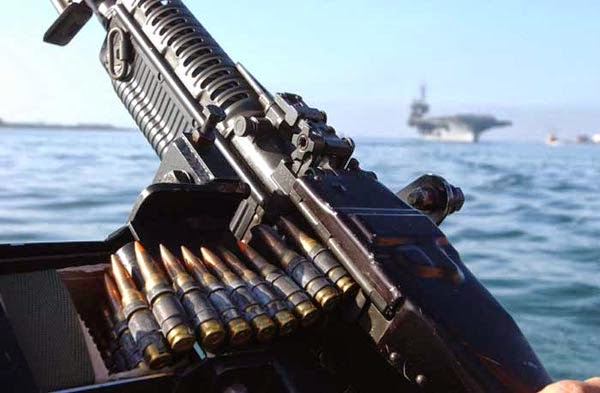
The M60 Machine Gun

The M60, officially the United States Machine Gun, Caliber 7.62 mm, M60, is a family of American general-purpose machine guns firing 7.62×51mm NATO cartridges from a disintegrating belt of M13 links. There are several types of live ammunition approved for use in the M60, including ball, tracer, and armor-piercing rounds.


Introduced in 1957, it has served with every branch of the U.S. military and still serves with other armed forces. Its manufacture and continued upgrade for military and commercial purchase continues into the 21st century, though it has been replaced or supplemented in most roles by other designs, notably the M240 in U.S. service.


The M1918 Browning Automatic Rifle (BAR)


The M1 Garand


The M1 Garand (officially designated as U. S. rifle, caliber .30, M1, later simply called Rifle, Caliber .30, M1, also abbreviated as US Rifle, Cal. .30, M1) is a semi-automatic rifle chambered for the .30-06 Springfield rifle cartridge. It was the first standard-issue semi-automatic rifle. Called "the greatest battle implement ever devised" by General George S. Primarily used during WWII, this rifles are highly effective on eliminating long range targets. Some of the Philippine Army uses this one as service rifle but later being replaced by M16.


The .32 Revolver


The Marine Scout Sniper Rifle

The Marine Scout Sniper Rifle or MSSR is a select fire sniper rifle developed from the Colt M16A1 rifle by the Philippine Marine Corps Scout Snipers due to the lack of a dedicated sniper rifle which is used in the Armed Forces of the Philippines.

The MSSR was developed due to the need of a sniper rifle system that could effectively use 5.56 × 45 mm NATO ammunition (most other sniper rifles use the larger 7.62×51 NATO cartridge). This was done mainly for cost-saving and availability reasons since the Armed Forces of the Philippines are actively engaged in counter-insurgency and internal security operations, especially against the Moro Islamic Liberation Front (MILF) the and Abu Sayyaf Group.

The shorter effective range of the 5.56 mm cartridge compared to the 7.62 mm was less of a factor due to the shorter ranges encountered in jungle combat, where the rifle is primarily used.[1] Its performance during subsequent combat operations proved the effectiveness of the weapon system, and it was adopted as the primary range sniper rifle (for ranges of up to 600 m) of the Philippine Marine Scout Snipers.


The M1903 Springfield (Philippine Sniper Rifle Retired)

The 1903 Springfield rifle was developed soon after the Spanish American War (1898). The military realized the Mauser Rifle the Spanish were using was superior to the Krag-Jorgensen rifles issued to the U.S. soldiers.  The US Army Ordnance Department made test models with their envisioned changes.  This rifle would reach legendary status, in service for close to a century.

 The Rock Island Arsenal (US Armory) in Springfield, Massachusetts manufactured the first new rifle, the Model 1903 “Springfield Rifle” or ’03 as it was commonly called.  Initially, it was chambered for the “Model 1903” cartridge, known as the “.30-03.” It was also fitted with a flimsy “rod bayonet.”  This model proved problematic later when it was found it led to bore erosion.   The first issue of guns was for 74,000 units.

 Many of the guns from this order did not go out into the field, but were recalled to have the modifications made that the newer models contained.

The rifle was redesigned in 1905 to accept a knife-type bayonet allowing both the infantry and the cavalry to use the weapon. It eliminated the need for separate rifles and carbines.  President Theodore Roosevelt was pleased with the newer bayonet over the old ramrod bayonet. “I must say that I think the ramrod bayonet is about as poor an invention as I ever saw.”

 After finding the original round nosed bullet to prove inferior to the German “spitzer” bullet (which was sharp-pointed), the manufacturers went into another redesign and was called the “Cartridge, Ball, Caliber .30, Model of 1906,” now widely known as the “.30 06.” With the new innovations from 1905 and 1906, the M1903 would be produced for the next 40 years.  This gun was also used in Olympic matches.
By World War I, it was the standard military rifle. It reigned supreme until the semi-automatic MI Garand Rifle came into play, and the “03” production halted.

 However, by Pearl Harbor, not many M1s were available, so the Springfield “03” was the main weapon issued to the men.  Early World War II battles were fought with the bolt-action Springfield.   


The Philippine Machete

More people are being killed by only using this weapon, more on using bullets!. Available anywhere in the philippines. A must have equipment during an army/police operations inside a thick and dense jungles of the Philippines.


Friday, March 16, 2012

Venomous Species in the Philippine Island

Wagler's pit viper, temple viper, temple pit viper 

Common names
Wagler's pit viper, temple viper, temple pit viper,bamboo snake, temple snake, speckled pit viper,temple pitviper.


Behavior
Nocturnal and arboreal, they appear quite sluggish as they remaining motionless for long periods of time waiting for prey to pass by. When prey does pass by, or if disturbed, they can strike quickly.


Venom
Their venom is a strong hemotoxin, and is potentially fatal to humans.

King Cobra
The king cobra (Ophiophagus hannah) is the world's longest venomous snake, with a length up to 5.6 m (18.5 ft). This species, which preys chiefly on other snakes, is found predominantly in forests from India through Southeast Asia to the Philippines and Indonesia. Despite the word "cobra" in its name, this snake is not a member of Naja ("true cobras") but belongs to its own genus.


Venom
The venom of the king cobra consists primarily of neurotoxins, but it also contains cardiotoxic and some other compounds. Toxic constituents are mainly proteins and polypeptides. During a bite, venom is forced through the snake's 1.25 to 1.5 centimeters (0.49 to 0.59 in) fangs into the wound, and the toxins begin to attack the victim's central nervous system. Symptoms may include severe pain, blurred vision, vertigo, drowsiness, and paralysis. Envenomation progresses to cardiovascular collapse, and the victim falls into a coma. Death soon follows due to respiratory failure. Moreover, king cobra envenomation is clinically known to cause renal failure.

A 1990 book makes a passing statement of a LD50 of 0.34 mg/kg for this species, however this value is inconsistent with most toxicological studies. For example, a recent study lists the LD50 of the king cobra venom as 1.6 mg/kg – 1.8 mg/kg, making its venom one of the least potent among the elapids. This value is further backed up by another toxicological study which lists the IV LD50 of the king cobra at 1.7 mg/kg. A similar mean LD50 value of 1.93 mg/kg was obtained from the venom of five wild caught king cobras in Southeast Asia (Meier et al. 1995). Engelmann listed the IV LD50 at 0.9 mg/kg. This species is capable of delivering a large quantity of venom, injecting a dose anywhere from 200-500 milligrams on average and can up to 7ml. Engelmann and Obst (1981) list the average venom yield at 420 mg (dry weight). Though the venom is weak compared to most other elapids based upon the LD50 in mice, it can still deliver a bite which can potentially kill a human due to the massive amount of venom it delivers in a single bite. Mortality can vary sharply with amount of venom involved, most bites involve nonfatal amounts. According to a research report from the University of Adelaide Department of Toxinology, an untreated bite has a mortality rate of 50-60% Depending on many factors, especially in cases of very severe envenomation, death can occur as early as 30 minutes after being bitten by this species but this is exceptionally rare as most untreated bite victims in Asia live through their bites, usually because the vast majority of bites involve non-fatal amounts of venom.

There are two types of antivenom made specifically to treat king cobra envenomations. The Red Cross in Thailand manufactures one, and the Central Research Institute in India manufactures the other; however, both are made in small quantities and are not widely available. Ohanin, a protein component of the venom, causes hypolocomotion and hyperalgesia in mammals. Other components have cardiotoxic, cytotoxic and neurotoxic effects. In Thailand, a concoction of alcohol and the ground root of turmeric is ingested, which has been clinically shown to create a strong resilience against the venom of the king cobra, and other snakes with neurotoxic venom.

The haditoxin in the king cobra venom was discovered by Singaporean scientists to be structurally unique and can have unique pharmacological properties. Biochemical studies confirmed that it existed as a non-covalent dimer species in solution. Its structural similarity to short-chain α-neurotoxins and κ-neurotoxins notwithstanding, haditoxin exhibited unique blockade of α7-nAChRs (IC50 180 nM), which is recognized by neither short-chain α-neurotoxins nor κ-neurotoxins.

Gold-Ringed Cat Snake  (Boiga dendrophila)    
The gold-ringed cat snake or mangrove snake (Boiga dendrophila) is a species of rear-fanged colubrid. It is one of the biggest cat snake species, averaging 6-8 feet (1.8-2.4 m) in length. It is considered mildy-venomous, but moderate envenomations resulting in intense swelling have been reported, though there have been no severe cases of hospitalisation or fatalities.

Distribution
Indonesia (Bangka, Belitung, Borneo, Java, Sulawesi, Riau Archipelago, Sumatra), India, Peninsular Malaysia, Singapore, Thailand, Vietnam, Philippine Islands (Panay).

Conus Geographus 
Conus geographus has a broad, thin shell, cylindrically inflated. Geography cones grow to about 4 inches (10 cm) to 6 inches (15 cm) in length. The size of an adult shell varies between 43 mm and 166 mm. The ground color of the shell is pink or violaceous white, occasionally reddish. It has a mottled appearance, clouded and coarsely reticulated with chestnut or chocolate, usually forming two very irregular bands. This intricately brown-and-white pattern is highly prized by shell collectors.
The geography cone has a wide, violaceous white or pink aperture and numerous shoulder ridges or spines. The shell is covered with thread-like revolving striae, usually nearly obsolete except at the base. The flattened spire is striated and coronated.
In comparison with other species, the shell has a noticeably wider and convex mid-body, with a flattened spire. Its walls are also noticeably thinner and lighter compared to other cone shells of similar length and size.

Venom
Conus geographus is highly dangerous - live specimens should be handled with extreme caution. Conus geographus has the most toxic sting known among Conus species and is responsible for more than thirty human fatalities. Their venom, a complex of hundreds of different toxins, is delivered through a harpoon-like tooth propelled from an extendable proboscis. There is no antivenom for a cone snail sting, and treatment is limited to merely keeping victims alive until the toxins wear off.
Among the compounds found in cone snail venom are proteins which, when isolated, have enormous potential as pain-killing drugs. Research shows that certain of these proteins target specific human pain receptors and can be up to 10,000 times more potent than morphine without morphine's addictive properties and side-effects.

Conus textile 
Conus textile, common name the cloth of gold cone is a venomous species of sea snail, a marine gastropod mollusk in the family Conidae, the cone snails, cone shells or cones.
Like all species within the genus Conus, these snails are predatory and venomous. They are capable of "stinging" humans, therefore live ones should be handled carefully or not at all. The conotoxin of this species is extremely dangerous to humans.

Spine-bellied Sea snake, or Hardwicke's Spine-bellied Sea snake, (Lapemis hardwickii) 
Body short, stout, neck region not less than half as thick at midbody;
head large; scales squarish or hexagonal, juxtaposed, outer 3-4 rows larger than others, scale rows: males 23-31 around neck, females 27-35, around midbody, males 25-27, females 33-41;
ventrals small, usually distinct anteriorly, not so posteriorly, in males 114-186, in females 141-230; head shields entire, parietals occasionally divided;
nostrils superior, nasals in contact with one another;
prefrontal usually in contact with second upper labial;
7-8 upper labials, 3-4 bordering eye; 1 pre- and 1-2 postoculars; 2, rarely 3, anterior temporals; greenish or yellow- olive above, whitish below, 35-50 olive to dark gray dorsal bars, tapering to a point laterally, occasionally encircling body, a narrow dark ventral stripe or broad irregular band occasionally present;
adults often lack any pattern and are uniform olive to dark gray;
head pale olive to black, yellow markings on snout present or not. Total length 860 mm (2' 4"), tail length 85 mm (3.3").

colubrine sea krait, banded sea krait or yellow-lipped sea krait (Laticauda colubrina), native in the Philippines called this one Walo-Walo/Tigwao/Sigwao 
The colubrine sea krait, banded sea krait or yellow-lipped sea krait (Laticauda colubrina) is a species of sea snake found in tropical Indo-Pacific oceanic waters.

Observation and nesting
Banded sea kraits rest and nest on rocky headlands and beaches of Sabah, Borneo. They can be seen in the wild at Pulau Tiga, the tip of Borneo and Mabul island. They are, however, seen on a many other rocky headlands around Sabah that are harder to access. Occasionally they come ashore at Tanjung aru close to Kota Kinabalu. They can be seen in captivity at The Green Connection, an aquarium in Kota KInabalu. The males come ashore early in the evening and wait at the high tide line for the females. Females are much larger and many males will escort and intertwine around a single female. They are also seen on Kadavu Island in Fiji and can often be found in the shallows whilst snorkelling. A specimen identified as a banded sea krait was seen on a small island off Padre Burgos, Luzon, Philippines, in November 2010. Locals familiar with the island say the snakes are most frequently found in crevices in the rock by day and roaming the beach and nearby waters after dark. This kind of snake has been seen also in beach in island of Boracay, Philippines.

black-banded sea krait 

The black-banded sea krait, Laticauda semifasciata, known in Japan as erabu umi hebi, and Okinawa as the irabu, is a member of the Laticauda genus of sea snakes. It is found in most of the warm waters of the western Pacific Ocean.
This venomous snake frequents coral reef areas. It has a short head, thick trunk, and no neck to speak of. The tail is simply extended skin, spread wide like a fin, and unsupported by any projection. The stomach is comparatively wide. Massing together near the shore, they breed between narrow cracks in the reef and in caves. It is a nocturnal snake that is rarely seen during the day. It requires oxygen to breathe and so breaks the surface every six hours.
They are too slow to catch fish in a straight chase, so they hunt for fish hiding in the coral. Their bite is highly venomous and paralyzes their prey. They lay their eggs on land. Generally found in Fiji, Southern Japan and Singapore their venom is ten times stronger than that of a cobra, making them extremely dangerous. Fortunately, this snake does not bite humans unless it feels threatened.
The erabu snake is a winter staple in southern Japan where it is believed to replenish a female's womanhood. Irabu soup irabu-jiru is said to taste like miso and a bit like tuna. This soup was a royal court cuisine of Ryukyu Kingdom with analeptic properties.

Philippine cobra (Naja philippinensis) 
The Philippine cobra (Naja philippinensis) also called Northern Philippine cobra, is a stocky, highly venomous spitting cobra native to the northern regions of the Philippines. The Philippine cobra is called "ulupong" in Tagalog and "Agwason" in Cebuano-Bisaya.


Habitat
Philippine cobra’s habitat include low-lying plains and forested regions, along with open fields, grasslands, dense jungle, agricultural fields, and human settlements. This species of cobra is particularly fond of water and it can always be found very close to ponds, rivers, or large puddles of water.


Predators
Predators of this species of cobra include humans, birds of prey, the King cobra, and the mongoose. Large rats that have been bitten by this snake and are in a position to fight back, often do so. Although rare, large rats have been known to fatally wound the snake by scratching, biting, or even poking one or both of the snakes eyes out. Of course, the rat ends up succumbing to the venom, but the snake will often sustain injury to one or both eyes, potentially becoming blind, and severe bites to the snout region leave the snake vulnerable to all sorts of infections and diseases.


Venom
The venom of the Philippine cobra is a potent postsynaptic neurotoxin which affects respiratory function and can cause neurotoxicity and respiratory paralysis, as the neurotoxins interrupt the transmission of nerve signals by binding to the neuro-muscular junctions near the muscles. Research done on the venom of this species has shown that its venom is purely a neurotoxin, with no apparent necrotizing components and no cardiotoxins. They are capable of accurately spitting their venom at a target that is up to 3 metres (9.8 ft) away from where they are. The symptoms of a bite might include headache, nausea, vomiting, abdominal pain, diarrhea, dizziness, and difficulty breathing. Bites by the Philippine cobra produce prominent neurotoxicity with minimal to no local signs. A study of 39 patients envenomed by the Philippine cobra (Naja philippinensis) was conducted in 1988. Neurotoxicity occurred in 38 cases and was the predominant clinical feature. Respiratory paralysis developed in 19 patients, and was often rapid in onset-in 3 cases apnea occurred within 30 minutes of the bite. There were 2 deaths, both in patients who were moribund upon arrival at the hospital. Three patients developed necrosis, and 14 individuals with systemic symptoms had no local swelling at all. Both cardiotoxicity and reliable nonspecific signs of envenoming were absent. Bites by the Philippine cobra produce a distinctive clinical picture characterized by severe neurotoxicity of rapid onset and minimal local tissue damage.
Although venom toxicity values can vary greatly even among specimens of the same species, the Philippine cobra has the most toxic venom among all of the Naja (cobra) species according to all known toxicological studies which give the species a value, thus making it the most venomous cobra species in the world. The subcutaneous LD50 for this species is 0.20 mg/kg and the average venom yield per bite is 90–100 mg (with a maximum yield of 250 mg).[10] In comparison, the corresponding SC LD50 for Naja naja (Indian cobra) venom is 0.45 mg/kg according to Dr. Bryan Grieg Fry. SC LD50 values for other cobra's include 1.15 mg/kg for Naja haje (Egyptian cobra), 2 mg/kg for Naja nigricollis (Black-necked spitting cobra), 0.72 mg/kg for Naja nivea (Cape cobra),  and 0.53 mg/kg for Naja atra (Chinese cobra).

Equatorial spitting cobra (Naja sumatrana) also called the Golden spitting cobra or Sumatran spitting cobra 
Equatorial spitting cobra (Naja sumatrana) also called the Golden spitting cobra or Sumatran spitting cobra, is a species of spitting cobra found in Southeast Asia.


Description
This species is medium in length, averaging between 0.9 to 1.2 metres (3.0 to 3.9 ft) in length, though they can grow a bit longer to 1.5 metres (4.9 ft). The body is compressed dorsoventrally and sub-cylindrical posteriorly. The head of this species is elliptical, depressed, and slightly distinct from the neck with a short, rounded snout and large nostrils. Eyes are medium in size with round pupils. Dorsal scales are smooth and strongly oblique. This species of cobra has no hood marks and colouration varies based upon geographical location. There are two colour phases: a yellow form commonly found in Thailand, and a black form found in Peninsular Malaysia, Singapore, and the islands where it occurs in Indonesia and the Philippines. Juveniles and adults also tend to be of different colour.


Distribution
This species of cobra is found in the equatorial Southeast Asian nations of Brunei, Indonesia, Malaysia, Singapore, Thailand, and in the Philippines. In Indonesia it occurs in the islands of Sumatra, Borneo, Bangka, Belitung, and the Riau Archipelago. It may occur in neighboring islands in Indonesia. It is possible that remnant populations still occur in western Java. In the Philippines it can be found only in the island province of Palawan.


Venom
Like other cobra species, this snake possess postsynaptic neurotoxic venom. The venom may also consist of cardiotoxins and cytotoxins. The venom of the Equatorial spitting cobra exhibited the common characteristic enzymatic activities of Asiatic spitting cobra venoms: low protease, phosphodiesterase, alkaline phosphomonoesterase and L-amino-acid oxidase activities, moderately high acetylcholinesterase and hyaluronidase activities and high phospholipase A2. Cardiotoxins represented 40% of the snakes venom protein. This species presented an IV LD50 of 0.50 µg/g mouse.

Pelamis platura, commonly known as the yellow-bellied sea snake 
Pelamis platura, commonly known as the yellow-bellied sea snake, yellowbelly sea snake, or pelagic sea snake, is a species of sea snake found in tropical oceanic waters around the world. It is the only member of the genus Pelamis.


Habits
These snakes breed in warm waters, and they are ovoviviparous with a gestation period of about 6 months. According to Ditmars, females bear live young in tidal pools. They are helpless on land, and they sometimes form large aggregations of thousands in surface waters. These snakes have a neurotoxic venom that is used against their fish prey. No human fatalities are known.


Venom
The venom of this species is highly potent, like other sea snakes. In Australia, sea snakes are rarely aggressive and bites are uncommon. The subcutaneous LD50 of the venom is 0.067 mg/kg (0.07 mg/kg) and the venom yield per bite is 1.0–4.0 mg/kg.

Antivenom
Sea snake venom can cause damage to skeletal muscle with consequent myoglobinuria, neuromuscular paralysis or direct renal damage. The venoms of significant species of sea snake are neutralised with Commonwealth Serum Laboratories Ltd (of Melbourne, Australia) Sea Snake (Enhydrina schistosa) antivenom. If that preparation is not available, Tiger Snake or polyvalent antivenom should be used. No deaths have been recorded from bites in Australian waters. The (Enhydrina schistosa) antivenom was tested specifically on Pelamus platurus and it effectively neutralised the venom.

Red Lionfish (Pterois volitans)  Image Source:  http://www.reefguide.org
The red lionfish (Pterois volitans) is a venomous coral reef fish in the family Scorpaenidae, order Scorpaeniformes. P. volitans is natively found in the Indo-Pacific region, but has become a huge invasive problem in the Caribbean Sea and along the East coast of the United States along with a similar species, Pterois miles. Red lionfish are clad in white stripes alternated with red, maroon, or brown. Adults can grow as large as 17 inches (43 cm) in length while juveniles may be shorter than 1 inch (2.5 cm).  They can live up to 10 years. It has large venomous spines that protrude from the body like a mane, giving it the common name of the lionfish. The venomous spines make the fish inedible or deter most potential predators. Lionfish reproduce monthly and are able to quickly disperse during their larval stage for expansion of their invasive region. There are no definitive predators of the lionfish, and many organizations are promoting the harvest and consumption of lionfish in efforts to prevent further increases in the already high population densities.

Rhabdophis
Rhabdophis is a genus of snakes, generally called keelback snakes, found primarily in southeast Asia.

(Limited Information)


Monday, December 26, 2011

Sendong deaths rise to 1,249; NPA urges punishment

Posted at 12/26/2011 6:24 PM | Updated as of 12/26/2011 6:24 PM
MANILA, Philippines - The death toll in the Philippines from one of the country's worst natural disaster in 2 decades has risen to 1,249 with about 1,100 missing, disaster officials said on Monday, as communist rebels said people responsible should be punished.
Tropical storm Sendong (international name Washi) sent torrents of water, mud and logs cascading through riverside and coastal villages on Mindanao island in mid-December, destroying more than 10,000 houses and displacing more than 300,000 people, who are mostly in emergency shelters.
Benito Ramos, head of the national disaster agency, said fishermen from as far as the central island of Bohol were helping recover bodies that had been washed hundreds of miles away.
"As long as there are bodies out there in the sea we will continue with the search and retrieval operations, even if it goes beyond the New Year," Ramos said in a radio interview.
Authorities had expanded the search area to a radius of 300 kilometers (200 miles), he said.
President Benigno Aquino, who inspected the disaster zone last week, has ordered an investigation, asking why officials had allow people to build houses in danger zones and had not stopped illegal logging.
The regional head of forestry and mining had resigned and an official supervising Lanao del Sur province had been removed, radio DzMM reported. Most of the logs that crashed into houses were washed down from Lanao del Sur province.
NPA vows punishment
On Monday, the communist party ordered its guerrillas to raise funds and help in relief efforts, and, as it marked its 43rd anniversary, it threatened its own punishment for those responsible for the disaster.
Active in 69 of 80 provinces across the country, the 5,000-member rebel force vowed to "make those responsible for the natural disaster and the ensuing massive loss of lives to answer to the people".
The military said the rebels were using the disaster as a pretence to step up extortion of mining, plantation, logging and construction companies.
The government and the Maoist rebels have declared unilateral truces during the Christmas and New Year holiday.
Only about 30 percent of victims found under tons of mud and debris and in the sea had been identified, because most people have no dental records and the government has no DNA database.
The bodies of victims have been identified have been handed over to relatives but the rest are being kept in concrete vaults.

Source: http://www.abs-cbnnews.com/nation/12/26/11/sendong-deaths-rise-1249-npa-urges-punishment

Tuesday, December 20, 2011

Exploring Bohol Island

Bohol is an island province of the Philippines located in the Central Visayas region, consisting of Bohol Island and 75 minor surrounding islands.[1] Its capital is Tagbilaran City. With a land area of 4,117.26 square kilometres (1,589.68 sq mi) and a coastline 261 kilometres (162 mi) long, Bohol is the tenth largest island of the Philippines.[2] To the west of Bohol is Cebu, to the northeast is the island of Leyte and to the south, across the Bohol Sea is Mindanao.

The province is a popular tourist destination with its beaches and resorts.[3] The Chocolate Hills, numerous mounds of limestone formation, is the most popular attraction. Panglao Island, located just southwest of Tagbilaran City, is famous for its diving locations and routinely listed as one of the top ten diving locations in the world. Numerous tourist resorts dot the southern beaches and cater to divers from around the world. The Philippine Tarsier, considered the second-smallest primate in the world, is indigenous to the island.

Boholanos refer to their island homeland as the "Republic of Bohol" with both conviction and pride.[4] A narrow strait separates the island of Cebu and Bohol and both share a common language, but the Boholanos retain a conscious distinction from the Cebuanos. Bohol's climate is generally dry, with maximum rainfall between the months of June and October. The interior is cooler than the coast.